Sunday, October 27, 2013
Monday, September 30, 2013
Thursday, September 19, 2013
Tuesday, September 10, 2013
Wednesday, May 8, 2013
Sunday, May 5, 2013
The Fog of War Video - Extra Credit
2. What happened during the Vietnam War? How many Americans and Vietnamese died in it? Why was it so controversial that it created one of the greatest anti-government protest movements in American history? Why does it remain controversial today?
3. Is it ever morally legitimate for citizens to criticize and protest a war undertaken by their country, if they believe it to be unjust, such as was the case with the Vietnam War? Is it legitimate for soldiers to criticize their countries policies and practices based on what they have experienced? What are the reasons for/against supporting freedom of speech and protest even during times of war? What are the dangers of not allowing protest vs. the dangers of allowing it?
4. What does McNamara mean by empathizing with the enemy? Should one empathize with one’s enemy in order to better handle him/them? Do we still continue and/or need to continue to construct and stereotype our opponents as enemies? How is that true in national and in international politics? Is it appropriate to see fellow citizens as enemies in a type of political and cultural warfare? How do we view are international enemies today? How much of this portrayal is reality and how much is it a simplification or stereotyping of their motives and characters?
5. What are the "eleven lessons" and what do they mean? Do they provide a good way of thinking about war? Why or why not? What are the lessons to be learned from McNamara's discussions of the Second World War, being President of Ford, the Cuban Missile Crisis and the Vietnam War?
6. Do and should morals have a place in war? What does McNamara means by “proportionality" and does proportionality matter or only whether you win or lose the war?
7. McNamara says about his role in the Second World War: LeMay said, “If we’d lost the war, we’d all have been prosecuted as war criminals.” And I think he’s right. He, and I’d say I, were behaving as war criminals. LeMay recognized that what he was doing would be thought immoral if his side had lost. But what makes it immoral if you lose and not immoral if you win? What do you think of McNamara's statement and question here? Why do you agree or disagree?
8. One of the controversies of the Vietnam War was the draft. Why was it such a controversy such that people even raise it as an issue today? If there is a draft, should it apply equally to all or should some groups and individuals be exempt? Should there be a draft to encourage all citizens to serve or should it only occur under special circumstances or never at all? Why or why not?
9. What are the similarities and differences between the Vietnam and Second Iraq War, if any? How do the actions of the Johnson administration compare with those of the Bush administration? What was the Tonkin Gulf Incident and Tonkin Gulf Resolution? How do they compare with the build-up to the Second Iraq War and the resolution to authorize the use of force? Is it legitimate to authorize the use of force but criticize how it was implemented? Why or why not?
10. What is the legacy of Robert McNamara? Should he be considered a war criminal, a bungler of the Vietnam War, or as someone who honorably served his country to the best of his abilities?

Chicano - Documentary
Part 1- click here- (1 hour)
Part 2 - click here (14 mins)
Part 3 - Click here (14 mins)
Part 4 - Click here. (14 mins)
Part 5 - Click here (14 mins)
Part 6 - Click here (14 mins)
Part 7 - click here (1 hour)
Part 2 - click here (14 mins)
Part 3 - Click here (14 mins)
Part 4 - Click here. (14 mins)
Part 5 - Click here (14 mins)
Part 6 - Click here (14 mins)
Part 7 - click here (1 hour)
Tuesday, April 30, 2013
Monday, April 22, 2013
Thursday, April 11, 2013
Sunday, April 7, 2013
TUskegee Airmen, 442 Combat Regimen, & Navajo Code Talkers Primary Sources
442nd Regimental Combat Team - (known as "The Purple Heart" and "Go For Broke" Battalion) were composed of entirely Japanese American soldiers who fought in World War 2 in the United States Military.
For more information click here


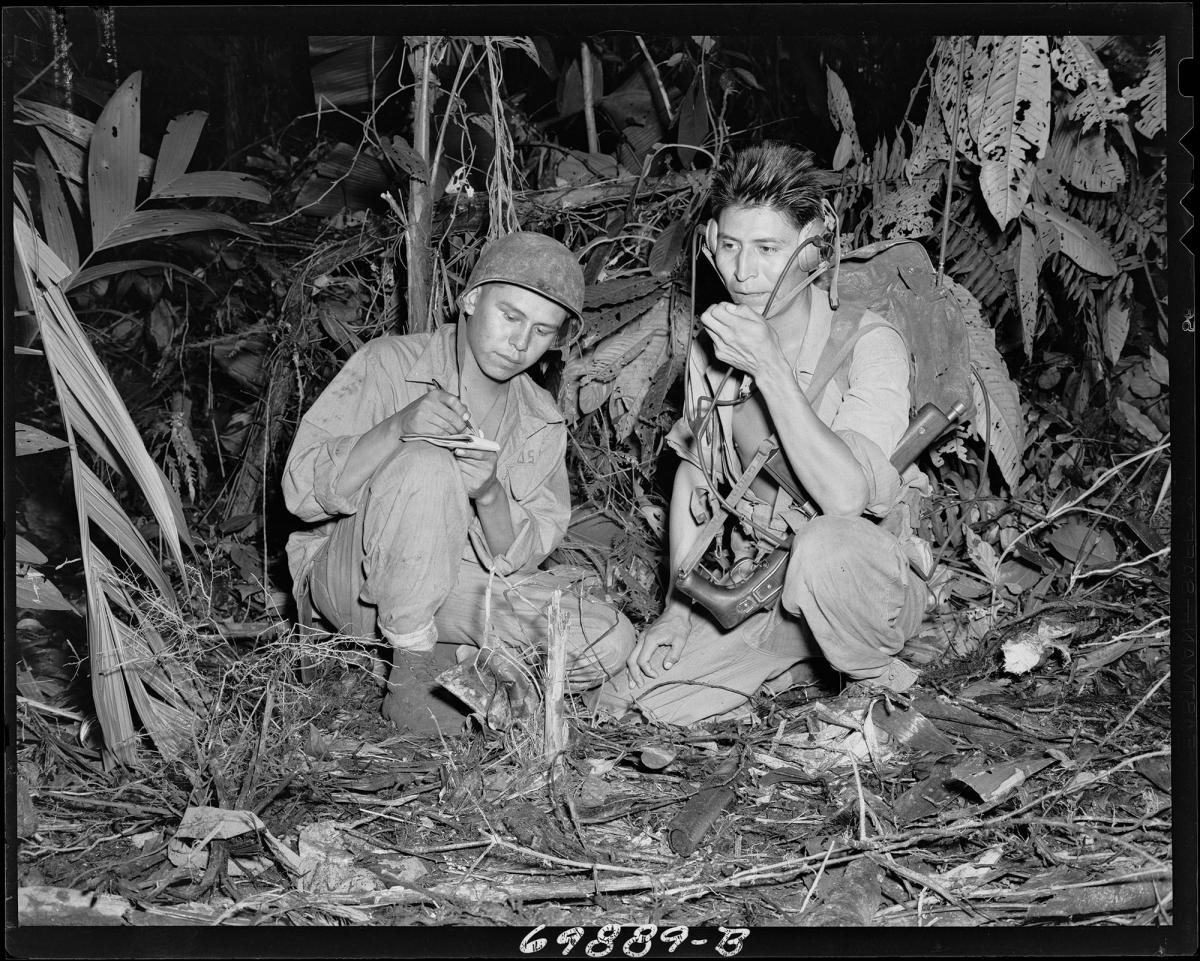
Navajo Code Talkers - were a group of Native Americans from the Navajo Nation that fought in the United States military. They used their native language to transmit important information. Their "code" or language was never cracked by enemies of the United States during the war.

Tuskegee Airmen - The Tuskegee Airmen were the first African-American military aviators in the United States armed forces. During World War II, African Americans in many U.S. states were still subject to the Jim Crow laws.[N 1] The American military was racially segregated, as was much of the federal government. The Tuskegee Airmen were subjected to racial discrimination, both within and outside the army. Despite these adversities, they trained and flew with distinction. All black military pilots who trained in the United States trained at Tuskegee, including five Haitians. For more information click here.


Friday, April 5, 2013
Thursday, April 4, 2013
World War 2 Notes 4/4/13
11th Grade Notes
1. Four Freedoms Speech - January 4, 1941 - speech by US President Franklin Roosevelt - he knew the US was going to have to get involved in World War 2, so said that everyone is entitled to four freedoms: SPEECH, RELIGION (worship), and freedom from fear and want.
2. The events that lead to Pearl Harbor -
1937 - Japan goes to war with China
July 1939 Roosevelt announces that Treaty of Commerce and Navigation will not be renewed
July 2, 1940 U.S. Congress passes Export Control Act
August Japan declares greater East Asia co-prosperity sphere
September 27 Japan signs Tripartite Pact with Germany and Italy
January 1941 Yamamoto prepares plan for attack on Pearl Harbor
July Japanese troops occupy Indochina
October Hirohito gives general approval for Pearl Harbor attack
November 8 Hirohito approves formal battle plan for attack in December
November 26 Japanese attack fleet sets sail from Japan
December 7 Japan launches surprise attack on Pearl Harbor
December 8 United States and Britain declare war on Japan
December 11 Germany declares war on United States
3. Infamy Speech - by Franklin Roosevelt in response to Japanese attack on Pearl Harbor.
4. Major Battles of World War 2
- Midway - June 4, 1942 - - the United States destroyed the Japanese fleet in the Pacific Ocean and brought the Allies closer to victory
- Normandy - June 6, 1944 turned the war in favor of the Americans, British and other Allies when they landed in Normandy, France
- Iwo Jima - 19 February – 26 March 1945), or Operation Detachment, was a major battle in which the United States Armed Forces fought for and captured the island of Iwo Jima from the Japanese Empire
- Okinawa, Japan - The Battle of Okinawa, codenamed Operation Iceberg,[3] was fought on the Ryukyu Islands of Okinawa and was the largest amphibious assault in the Pacific War of World War II.[4][5] The 82-day-long battle lasted from early April until mid-June 1945.
- Battle of the Bulge (16 December 1944 – 25 January 1945) - major European battle started by the Germans in response to Normandy, they hoped to drive the Allies (US, England etc) out.
Wednesday, April 3, 2013
Love Letter from the Front
France, July 22, 1944
Darling:
...Yesterday I had to visit all the units again, to get statements for my report. The regiment is in contact with the enemy, so such trips always have their skin-prickling moments. I got back pretty tired about 7 o'clock, just in time to get a phone call from the CO of one of Sirrine's battalions, also in the line, requesting me to come up to discuss personal problems of his body-guard, a fine young fellow who had simultaneously received word that his sister, an army nurse, and a brother, a flyer, had both been killed in the So. Pacific, and that his remaining brother had been critically wounded with another division here in France.
While up there, I hit the favorite hours for Jerry's activities, and, frankly, pretty nearly had the pants scared off me, with samples of shelling, mortar-fire, and strafing. I got back at midnight, having driven the jeep myself all day (my driver being on guard) slipping and slewing through mud axle deep whenever I got off the surfaced roads, which was frequently. I hate to admit it, but after a day like that, I feel my years. Yeah, man! War is a young man's game!...
News on 90th has been released. Maybe you know something now of what the boys have gone through: constant contact with the enemy since D-Day. They've taken their losses, too. Somebody says "Old Bill got it today." "No!" you say. "Son-of-a-bitch!" And you go on about your business, with a little more emptiness inside, a little more tiredness, a little more hatred of everything concerning war.
There is a certain cemetery where some of my closest friends in the division lie. I saw it grow -- shattered bodies lying there waiting for graves to be dug. Now it is filled. The graves are neat and trim, each with its cross. Occasionally I visit it when passing by. Always there are flowers on the graves: Sometimes a potted geranium has been newly brought in; sometimes there is a handful of daisies. The French people, especially the children, seem to have charged themselves with this little attention. Our bombers are roaring overhead just now, in the hazy afterglow of sunset. In a few seconds I'll hear the crunch of bombs -- a good-night kiss for the Nazis. There they go!
The war news is good; but we're fighting over optimism. I suppose people at home are elated; the boys up front are still in their fox-holes.
I'll try to write at least a note every day or so. Take care of yourself. I'm fine.
Love,
John
Subscribe to:
Posts (Atom)